The wine market is undergoing a structural transformation affecting production, consumption, and communication models. Market globalization, the digitalization of processes, and the growing consumer base have made the competitive environment more dynamic and selective. Today, simply producing a good wine or telling your company’s story is no longer enough: these elements represent a starting point, not a competitive advantage. Wineries that want to grow must build an integrated marketing system capable of connecting strategy, communication, distribution, and data in a project consistent with their positioning.
Italy boasts over forty-five thousand producers, a mosaic of diverse businesses in terms of size, target audience, and market presence. While this fragmentation is an asset, it also requires a new awareness: simply existing isn’t enough; you need to be recognizable and relevant. The contemporary consumer, informed and connected, doesn’t simply choose a wine based on its sensory characteristics or geographical origin. They value a brand’s overall consistency, the transparency of its information, its ability to offer personalized experiences, and its alignment with their values and lifestyles. This audience desires active engagement through new languages, digital environments, experiential experiences, and alternative channels to traditional approaches.
The proliferation of contact points between company and customer has changed the very nature of wine marketing. Wine is discovered on a digital platform, tasted at an experiential event, purchased online or in large-scale retail outlets, and shared on social media as a sign of identity. This complexity requires a strategy that differentiates tone, message, and objectives based on the channel and audience. Communicating with a large-scale retail buyer, an Asian importer, or a young enthusiast purchasing via mobile requires different approaches and tools, but a single brand vision. Without this coherence, every communication effort risks being wasted.
Marketing today is a process of continuous adaptation. It means understanding the competitive landscape, analyzing consumer data, interpreting trends, and transforming them into concrete proposals. It involves the ability to design measurable brand experiences that spark emotion, curiosity, and loyalty. Value no longer comes solely from the product, but from interaction: from the way a brand integrates into people’s daily lives, offering meaning, utility, or entertainment. Understanding customer behavior and expectations is what makes a wine relevant, desirable, and relevant.
Then there’s a crucial aspect: wine marketing is what allows you to sustain and increase the economic value of the product. In a market where the offering is broad and price competition is increasingly aggressive, perception becomes a determining factor. A brand that communicates consistently, manages the right channels, and creates recognizable experiences can legitimize a premium positioning and defend margins, while those without a strategy end up competing solely on price. The difference lies not in intrinsic quality, but in the ability to make it perceptible and meaningful to the right audience.
Marketing for wineries is no longer an ancillary function, but a strategic lever that directly impacts competitiveness and economic sustainability. It is the driving force that coordinates sales, distribution, relationships, and communications, ensuring consistency between vision, product, and market. In a constantly evolving industry, where consumers change faster than companies, marketing is what allows them to stay relevant, engage with contemporary languages, and transform a bottle of wine into a brand experience capable of generating long-term value.
From Vineyard to Brand: Building Identity and Positioning
In today’s competitive landscape, a winery’s identity is no longer built solely around its origins or declared values, but through its ability to generate recognition and consistency in every interaction with the public. A brand is no longer a narrative of its history, but a system that organizes experiences, languages, and behaviors, making the company distinguishable and relevant in a crowded and globalized environment.
Building an identity today means defining a set of clear and shared meanings that guide brand perception. It’s not about highlighting one’s roots or production practices, but rather identifying one’s role in the market and in people’s minds. What distinctive contribution does a winery bring to consumers today? What values does it embody? What experience does it promise and deliver? The answers to these questions form the basis of contemporary positioning: not a communication formula, but a strategic decision that guides the entire enterprise.
Positioning is the synthesis of internal identity and public expectations. It goes beyond simply “explaining what you do,” but also explains “why you’re relevant” in a given competitive landscape. Defining your space means clearly choosing the battles to fight: deciding whether you want to be perceived as a brand focused on wine research, food culture, measurable sustainability, or the experiential enjoyment of wine. Each direction requires different languages, channels, and metrics, but in all cases, consistency determines the strength of your positioning.
Today, narration is no longer just storytelling, but a story system: an ecosystem of coherent content that exists across multiple channels and formats, connected by a single brand logic. Wine is no longer told through words alone, but through digital experiences, collaborations, events, customer journeys, and immersive communication practices. What makes the difference is not the ability to “excite,” but the ability to construct recognizable meanings, capable of generating trust and belonging.
Visual branding has also acquired a more complex strategic dimension. It’s no longer simply a matter of choosing a logo or an eye-catching label, but of creating a visual language capable of consistently representing the chosen positioning across every touchpoint. Design becomes a tool for cognitive clarity, a code that facilitates recognition and strengthens brand memory. A well-constructed visual system is a form of strategy: it makes the brand legible, reliable, and contemporary.
Building a wine brand today means managing a competitive asset, not simply an aesthetic one. Brand identity becomes a decision-making platform: it guides communication, guides product choices, influences pricing, and sets the tone for relationships with partners and consumers. In a market where quality is a prerequisite, not an advantage, the difference lies in the ability to generate perceived value and make it measurable.
A solid brand isn’t a symbol, but a promise kept over time. It’s what allows a company to maintain margins, attract buyers and investors, and engage with diverse audiences without losing its identity. It’s an asset that grows with reputation and transforms wine production into a contemporary brand project: dynamic, credible, and capable of adapting to the languages and behaviors of today’s consumers.
Strategies and Channels: How to Build an Effective Wine Marketing Plan
Defining a clear identity and competitive positioning is just the starting point. For a vision to translate into results, a marketing plan based on methodology, analysis, and continuity is needed. In the current context, marketing is no longer a set of promotional activities, but a system that synergistically connects strategy, channels, content, and data. For a winery, this means designing an ecosystem in which every action—digital or physical—contributes to building brand equity and generating measurable financial returns.
The first step is the analytical phase: understanding where you stand in the market, the dynamics driving demand, and the levers being pulled by competitors. It’s not enough to simply observe consumer trends or purchasing behavior: you need to analyze the potential of channels, brand reputation, and the economic variables that influence distribution. Only a data-driven vision allows you to identify growth areas and build realistic goals. Every effective strategy stems from a precise diagnosis, not from creative inspiration.
Goal setting must be measurable and progressive. Objectives aren’t slogans, but rather indicators: increasing brand relevance in specific segments, increasing average customer value, penetrating new markets, or expanding the direct channel. The important thing is that each objective be supported by evaluation metrics and a clear timeline. This approach allows each activity to be linked to a concrete result, reducing dispersion and subjectivity.
The operational heart of the strategy is building a channel system. Today, a wine brand must think omnichannel: website, e-commerce, B2B platforms, marketplaces, social media, large-scale retail trade, events, and hospitality must integrate into a single experiential journey. The company website is no longer a showcase, but a data and content hub: it collects information, measures behavior, feeds the CRM, and becomes the starting point for all campaigns. Digital activities must interact with the sales network, wine tourism, and distribution to generate a seamless experience and consistent messaging.
Content takes on a different strategic role than in the past. Descriptive articles or emotional posts are no longer enough: materials that convey expertise, value, and thought leadership are needed. White papers, short informative videos, industry reports, or educational mini-formats can consolidate a winery’s reputation and position it as an authoritative reference. Communication must not only “storytell,” but also build trust, fostering measurable engagement and conversion.
Social media, in this logic, is not an end in itself but an amplifier. It serves to test language, intercept conversations, validate proposals, and build communities. Effective communication doesn’t depend on the quantity of content, but on the precision with which it is distributed and analyzed. Online advertising must also evolve: less promotional pressure, more target intelligence, and campaigns based on micro-segmentation, remarketing, and personalized customer journeys.
Alongside digital, experiential marketing remains essential. Events, professional tastings, partnerships with chefs, in-cellar formats, and collaborations with like-minded brands enable the transformation of in-person relationships into a lever for loyalty and content generation. Direct experience becomes integral to the marketing process: it generates data, generates perceived value, and strengthens brand consistency. Wine tourism, if managed as a strategic channel and not as an ancillary activity, can act as a bridge between awareness and purchase.
Data management is the element that connects all the components of the plan. Every interaction—visit, order, contact, event participation—generates information that must be collected, interpreted, and translated into insights. The integration of an advanced CRM, marketing automation tools, and analytics dashboards allows you to understand audience behavior, segment audiences, and anticipate trends. Marketing is no longer just communication, but also operational intelligence.
Finally, continuous measurement is what distinguishes an effective strategy from a set of good intentions. Each channel must be evaluated for returns, efficiency, and contribution to overall brand equity. KPIs such as conversion rate, retention, cost per acquisition, shelf turnover, and margin per channel become the tools for governing the system. The goal is not just to improve, but to understand why something works and replicate the model.
Building an effective wine marketing plan today means designing an interdependent system of analytics, content, channels, and data. It’s a task that combines strategic vision and operational precision. Those who successfully integrate these dimensions transform marketing from a cost center into a driver of growth and competitive positioning, enabling their company to adapt with agility to new market trends and changing consumer behavior.

From digital to point of sale: integrating online, retail and experience
For years, wine marketing has treated the digital world and the commercial world as two parallel universes: communication on one side, distribution on the other. Today, this separation is no longer sustainable. Consumers experience a fluid purchasing journey, where the distinction between online and offline has been abolished. They discover a wine on social media, search for it on an e-commerce site, purchase it in a supermarket, or taste it at a winery. In this scenario, the only effective strategy is one that designs a coherent and continuous brand experience throughout the entire interaction process.
Integration isn’t just a matter of coordinated communication, but of systemic design. Each channel—digital, retail, trade, hospitality—must be part of a single ecosystem, with a shared language and measurable objectives. Brand identity must be expressed uniformly: from the website to the label, from the point of sale to the winery experience, and even through digital content. Consistency in tone, design, and messaging isn’t an aesthetic exercise, but a lever for building trust and recognition, the two assets that determine purchasing preferences.
Wine tourism, in this context, is not just an experiential experience, but a channel for engagement and profiling. Every visit to the winery becomes a source of data and relationships: it allows you to understand customer behavior, collect contact information, test new products, and activate loyalty programs. When connected to CRM and marketing automation systems, wine tourism becomes an entry point into the relationship cycle: from check-in at the winery to personalized newsletters, from targeted promotions to online repurchase offers. The goal is not only to excite, but to transform every physical experience into useful knowledge and a measurable relationship.
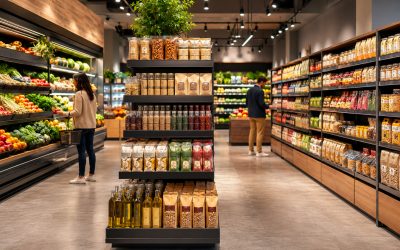
A presence in modern retail requires an even more methodical approach. Large-scale retail is not just a distribution channel, but a competitive environment governed by category management rules, margins, and turnover performance. In this context, wine must be treated as a branded product, not simply a reference. Packaging becomes a lever for instant communication: design, naming, materials, and information must convey positioning and value in just a few seconds of attention. The label and bottle are not just aesthetic elements, but conversion tools on the shelf.
Technology today offers powerful tools to transform even the physical shopping experience into a digital connection. QR codes, augmented reality, traceable links, and multimedia micro-content allow communication to extend beyond the bottle, connecting the purchase to information, storytelling, pairing, or exclusive content. Every interaction becomes a useful touchpoint for gathering insights and nurturing the post-purchase relationship.
The relationship with the point of sale requires active management, not just sales. The most effective companies treat large-scale retail outlets as a communications partner: they provide staff training, technical materials, smart displays, shared promotional plans, and performance monitoring tools. Guided tastings, co-marketing, and promotional activities are no longer one-off initiatives, but strategic tools. Each initiative must be measured in terms of sell-out, incremental awareness, and visibility returns.
A key aspect concerns the education of the distribution channel. Buyers, department managers, and counter staff are the real intermediaries of the brand message. Educating them on brand content, sales pitches, and available digital tools increases conversion rates and reduces dependence on price as a competitive lever. The wine trade marketing of the future will increasingly be based on a partnership model, based on shared data and common goals.
Integrating digital, retail, and experience doesn’t mean adding together activities, but rather building a coherent system that accompanies the consumer on a seamless journey. Digital attracts and builds loyalty, the point of sale offers visibility and scale, and the in-person experience strengthens the bond and generates content. When these elements work together, the company shifts from a “presence” approach to an “orchestrated experience.” It is in this ability to connect that the true competitive advantage of contemporary wineries lies: transforming every channel into a lever for relationships and every relationship into measurable value.
Measure for Growth: KPIs, Data, and Continuous Improvement
In a context where the complexity of channels and audiences constantly increases, wine marketing can no longer rely on intuition. The only way to ensure the effectiveness and sustainability of strategies is to build a solid data culture capable of translating activities into insights and decisions. Measurement isn’t just about verifying results: it’s the tool that allows for continuous learning, optimization, and innovation.
Every strategy begins with defining the parameters of success. KPIs – key performance indicators – are not random numbers, but management tools. They must reflect strategic priorities and measure not only the quantity of results, but also the quality of interactions and the value generated over time. In direct marketing, conversion and repurchase metrics allow us to assess the sustainability of digital channels; in large-scale retail and retail, product rotation speed, net margin per SKU, and shelf visibility measure distribution competitiveness. In all cases, data becomes useful only when linked to a specific objective and a consequent decision.
Data analysis today is no longer an afterthought: it’s an integral part of the marketing process. Analytics tools, integrated dashboards, and advanced CRMs allow you to gather real-time information on every stage of the customer journey. Digital metrics—qualified traffic, dwell time, conversion rate, engagement rate—must be viewed strategically, not as isolated values. Measurement only makes sense when integrated into a system that connects cause and effect, action and impact, investment and return.
In the offline world, the challenge is to bring the same level of traceability. Large-scale retail sales, events, tastings, and wine tourism can generate equally significant data if managed with the right tools: sell-out analysis, digital feedback, visitor behavior monitoring, and loyalty systems linked to direct channels. The goal is to build a unified view of performance, where every touchpoint contributes to a deeper understanding of the audience and the market.
A mature approach to marketing isn’t limited to data collection, but is based on its evolutionary interpretation. Numbers become decision-making language only when contextualized: a spike in website traffic, an increase in engagement, or a growth in winery visits are only partial indicators until they’re interpreted in light of the value generated for the brand. Analysis isn’t an accounting exercise, but a form of strategic intelligence that allows us to connect operational performance to positioning decisions.
The real leap forward comes with the adoption of predictive models and artificial intelligence tools. AI analytics platforms now enable anticipation of demand, estimate purchase probability, optimize prices, and forecast the performance of a new product based on historical and behavioral data. For a winery, this means moving from reactive to proactive marketing, where decisions are guided by forecasts and simulations, not just actual results. Artificial intelligence does not replace experience, but amplifies it, providing more precise scenarios and reducing decision-making uncertainty.
Continuous improvement is the principle that holds the entire system together. In a market subject to constant change—regulatory, distribution, and technological—the ability to quickly learn from data and update strategy is what distinguishes resilient companies from static ones. Measurement thus becomes a lever for competitiveness, not an exercise in control. It allows for correction, innovation, and refinement of every action, maintaining consistency between vision and results.
Data culture isn’t a technical skill, but a leadership skill. It means shifting marketing from an operational function to a decision-making function, capable of guiding the entire company. In a sector like wine, where production times are long but communication times are immediate, the intelligent use of data is what allows for the reconciliation of stability and innovation. Ultimately, measuring for growth isn’t about counting what has happened, but about building what can happen.
The value of an integrated strategy for wineries
The wine sector is undergoing a profound reconfiguration: it’s no longer enough to produce quality, but rather to design value. Competitiveness depends not only on wine, but on a company’s ability to build a strategic system in which marketing, distribution, communications, and data interact coherently. Wine today is a cultural and relational product, but above all, an experience that unfolds on multiple levels: physical, digital, and cognitive. Managing this complexity requires an integrated vision and appropriate tools.
An effective strategy isn’t born from the sum of multiple activities, but from a unified operating model. Brand identity provides direction, positioning defines competitive priorities, while the marketing plan translates all this into coordinated and measurable actions. Digital channels become platforms for visibility, interaction, and data collection; distribution represents the commercial bridge that brings the brand to market; direct experiences—events, tastings, hospitality—strengthen the bond with the public and generate return on investment. Each element contributes to a single goal: building a coherent, recognizable brand presence capable of generating returns.
When the strategy is truly integrated, each channel feeds the next in a continuous cycle of value. A customer who discovers a wine online and then finds it in a large-scale retail store experiences a more fluid and natural relationship; a buyer who receives consistent materials recognizes the brand’s solidity; a consumer who experiences the same language on a label, a video, or a newsletter perceives reliability and expertise. Integration is not just a communication principle, but a financial lever: it increases efficiency, reduces waste, and strengthens the company’s reputation.
Thinking of marketing as an integrated system also means adopting an evolutionary perspective. Data collected from every interaction becomes the basis for predictive decisions, technology enables personalized experiences, and the brand community becomes a long-term strategic resource. Value no longer resides in a single campaign or channel, but in the ability to dynamically and adaptively orchestrate flows, content, and relationships.
For many wineries, one of the most significant challenges is managing the large-scale retail channel. Large-scale retail is not simply a sales space, but a competitive ecosystem where brand visibility, category management, and commercial partnerships determine success. Managing it strategically means planning product assortments, crafting visual storytelling, developing trade marketing tools, and monitoring performance. It’s an area that requires method, vision, and analytical data analysis to transform shelf presence into real brand growth.
Ultimately, integration represents the cutting edge of wine marketing today: not a trend, but a distinctive skill. Companies that successfully connect insights, content, and channels into a single strategic architecture will be able to compete in the most advanced markets. Those wishing to delve deeper into the logic and tools of this process can consult our guide to wine marketing in large-scale retail, designed to guide wineries toward sustainable growth models and competitive positioning in retail and organized channels.
Frequently Asked Questions about Winery Marketing
When it comes to marketing for the wine industry, recurring questions often arise: how to combine tradition and innovation, how to measure campaign effectiveness, whether to sell directly or through distributors, how to choose the right channels, and much more. The following FAQs aim to answer the most common questions of those working in the wine industry, offering detailed and concrete explanations.
What is the best strategy to increase direct-to-consumer (D2C) sales in the wine industry?
Strengthening direct-to-consumer (D2C) sales requires an integrated strategy that combines digital marketing, efficient logistics, and customer relationships. First, you need to build a solid direct channel (website + e-commerce) that consistently represents the brand, offering a seamless user experience. Content plays a crucial role: stories from the winery, videos of the harvest, insights into grape varieties, and food pairings build a connection with the audience. CRM becomes essential for segmenting customers, profiling preferences, and activating personalized campaigns (email automation, dedicated offers, abandoned cart recovery). Attracting visitors isn’t enough: you need to guide them to conversion with optimized landing pages and clear calls to action. Finally, supporting the channel with targeted promotions, loyalty programs, and retargeting campaigns completes the loop. Without ongoing attention to UX, logistics (shipping, returns), and loyalty, any strategy risks being ineffective.
How do I choose the most effective digital channels for a winery?
The choice of digital channels should be based on audience analysis, objectives, and resources. There’s no point in having a presence everywhere: it’s better to focus on a few well-managed channels. For example, if your target audience is wine enthusiasts, wine lovers, and wine tourists, a website blog and SEO are essential: well-optimized content attracts qualified traffic and supports organic positioning. If you want quick visibility or to promote offers, advertising on Google Ads, Facebook/Instagram Ads, or LinkedIn campaigns for B2B activities can complement your strategy. Social media is more about building relationships than direct sales: visual stories, vineyard videos, and live tastings. Finally, if the winery receives visits (wine tourism), a mobile app or online booking services become useful channels. The key is to test, measure, and focus resources on the channels that generate the best returns.
How long does it take to see results from a wine marketing strategy?
Wine marketing is a medium- to long-term investment. Don’t expect noticeable results in a few weeks, especially if you’re starting from scratch or with limited resources. Typically, initial signs (increased traffic, growing brand awareness, a few contacts) can emerge within 3-6 months if activities are consistent and well-focused. However, the most significant results—increased direct sales, penetration of new channels, and turnover in large-scale retail trade—require 12-24 months of work. Another important variable is scale: smaller businesses or those with limited production may take longer. Establishing key performance indicators (KPIs) and periodically reviewing the plan are crucial to adjust course and optimize resources along the way.
Should you invest in premium packaging and labels to stand out?
Yes, but with balance and consistency with the brand positioning. Packaging and label are often the first visual contact with the consumer, and their quality directly influences the perception of value. According to research published by PuroMarketing, 84% of consumers believe that a high-quality label increases the perception of wine’s value.
However, an attractive design alone isn’t enough: the label must communicate clearly, be legible, and consistent with the brand’s visual identity and tone. Effective packaging isn’t the most elaborate, but the one most relevant to the product’s positioning and strategy. Excessive sophistication that reduces profit margins or confuses the target audience can have counterproductive effects.
The goal is to design a distinctive yet functional packaging system capable of expressing the brand’s personality, boosting its recognition, and improving competitiveness at the point of sale.
What are the most important KPIs to monitor for a winery?
KPIs (Key Performance Indicators) must be selected based on strategic objectives. Among the most useful are: organic website traffic, ranking for strategic keywords, conversion rate (visitors → contacts/orders), average order value, repurchase frequency, cart abandonment rate, customer acquisition cost (CAC), advertising campaign ROAS, product rotation across sales channels, out-of-stock percentage, number of active products in large-scale retail/retail, qualitative feedback, and brand sentiment. Regularly monitoring these indicators provides visibility into what’s working and what needs review, allowing for informed decisions and ongoing optimization of the plan.
Is it difficult to enter large-scale retail? What are the main challenges?
Yes, entering large-scale retail channels (GDO) represents one of the most complex challenges for wineries. Large-scale retail buyers require volumes, structured commercial terms, margins, efficient logistics, and point-of-sale support. The main challenges include: adapting packaging and formats to shelf demands, managing returns and discounts, ensuring timely deliveries, motivating shelf rotation, and convincing customers with promotional materials and tastings at the point of sale. Furthermore, competition is fierce, and many wines must compete with established brands. A winning strategy often includes a pilot phase with smaller chains, the use of POS materials, buyer training and co-marketing, and continuous performance monitoring.
How can artificial intelligence support wine marketing?
Artificial intelligence (AI) is now a growing resource for the wine industry as well, supporting a variety of activities: predictive analysis of purchasing behavior, advanced customer segmentation, personalized product recommendations, chatbots for customer service, advertising campaign optimization, market trend forecasting, and real-time performance evaluation. A recent study examined how AI applied to the wine industry can improve sustainability, winery efficiency (irrigation, quality control), and customer experience (virtual tours, personalized recommendations) (arXiv). AI does not replace human intuition, but enhances it, offering predictive data and useful scenarios for faster and more accurate decisions.